
What is Plantar Fasciitis?
Before we dive into fixing the problem, we first need to understand what the problem actually is. Too often, people are told they have 'plantar fasciitis' without anyone really explaining what that means.
Understanding Fascia
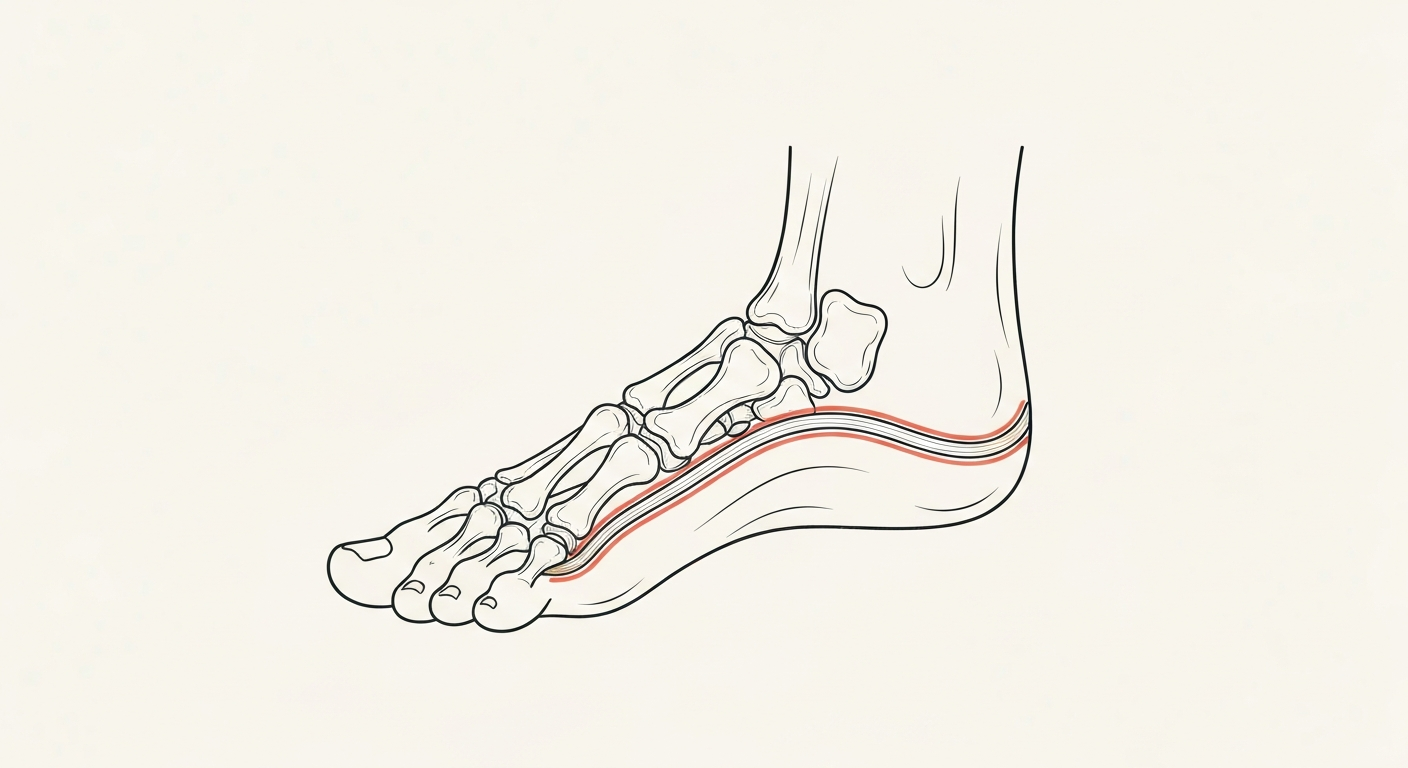
Fascia is a type of connective tissue. If you've ever observed raw meat and noticed the white, fibrous layers surrounding the muscles and tendons, you've seen fascia. In the human body, fascia wraps around muscles, ligaments, and tendons, holding everything in place, providing structure, and even storing and releasing energy.
The plantar fascia is a particularly strong band of fascia that runs along the bottom of your foot. It stretches from the heel bone to the base of your toes, acting like a built-in support for the arch of your foot.
When you walk, run, or even just stand, the plantar fascia absorbs shock, stabilises your foot, and contributes to propulsion, storing energy as you step down and releasing it as you push off.
When this tissue becomes inflamed or damaged, the result is what most people know as plantar fasciitis. More accurately, however, the condition is often plantar fasciopathy, meaning the tissue itself is degenerating or breaking down under repeated stress, not just inflamed.
Pain: More Than Just Tissue Damage
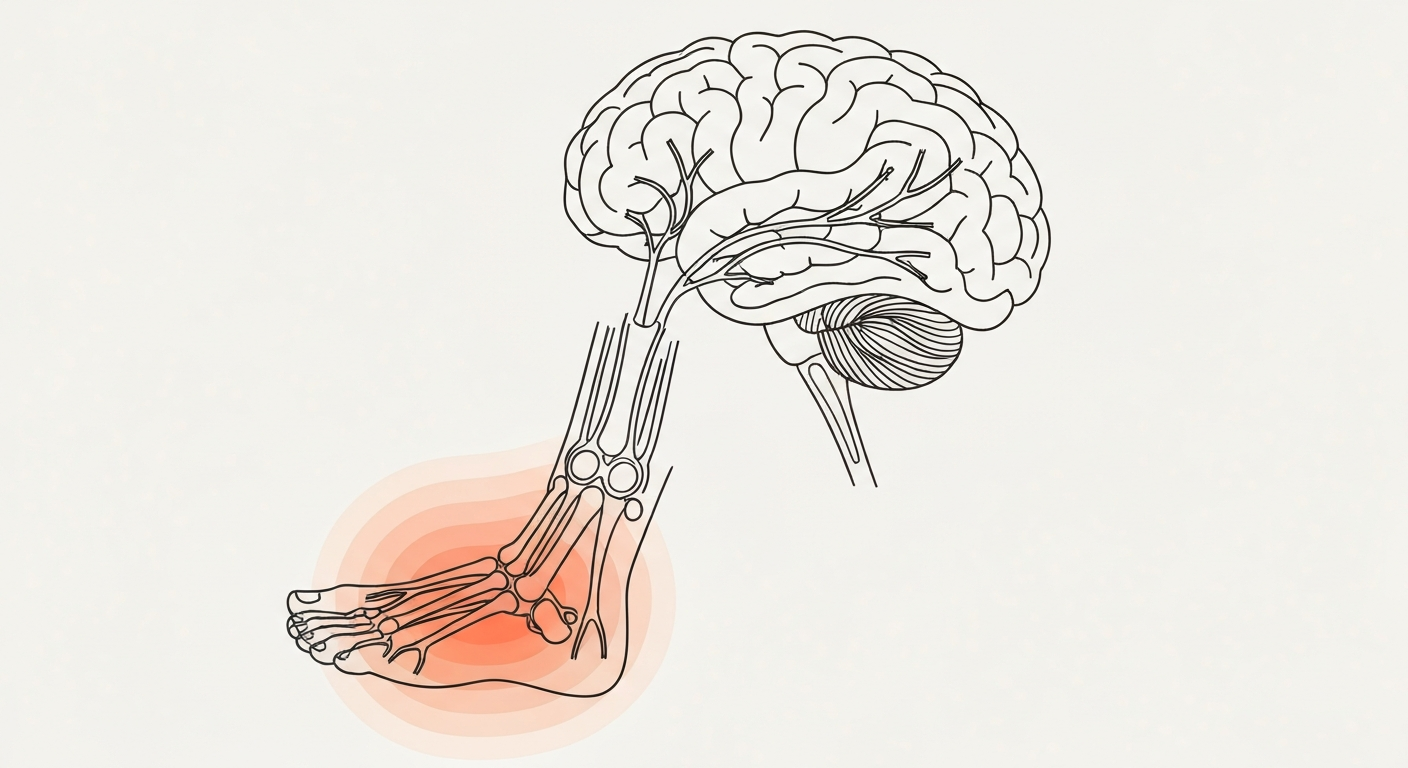
To understand plantar fasciitis pain, we also need to briefly explore what pain actually is. Pain is not just a simple signal from the body; it is an alert system.
- 1A potential threat or injury stimulates nerves in the body.
- 2These nerves send signals to the brain.
- 3The brain interprets the signal and decides how painful it feels.
This means that the same physical input can feel very different depending on the situation. Imagine stepping on a nail:
Your brain is always weighing context, stress, and environment when deciding how to interpret pain signals. This is why factors such as fatigue, emotional stress, or even fear can make pain feel worse.
Symptoms of Plantar Fasciitis
Most people with plantar fasciitis describe a very similar set of experiences:
- Sharp pain with the first steps in the morning.
- Pain after sitting or being still. When you stand again, it feels like stabbing or tearing.
- Pain throughout the day, especially when standing, walking, or running.
- Aching at night.
- Tenderness around the heel or sole. The pain usually radiates from the heel along the arch of the foot.
If these symptoms sound familiar, there's a strong chance you're dealing with plantar fasciitis.
Why It Happens
The plantar fascia is like the last line of defence in your foot. When your foot muscles weaken or your joints become stiff, the fascia is forced to take over too much of the workload. Over time, it becomes irritated and begins to break down.
Think of it like a suspension bridge that has carried too much traffic for too long — the cables fray, the structure weakens, and eventually, it can no longer do its job.
Similarly, when the plantar fascia is overworked, inflammation and degeneration set in, leading to pain with every step.
Other Conditions to Rule Out
Not all heel pain is plantar fasciitis. It's important to consider other possible diagnoses, especially if your symptoms don't quite match. Conditions that can mimic plantar fasciitis include:
If your pain does not line up with the hallmark signs of plantar fasciitis, particularly pain on the heel or sole that is worst in the morning or after rest, it may be worth seeking professional guidance for further investigation.
Do you need help deciding if we're the right clinic for you?
If you’re not quite ready to book an appointment yet and have some questions you would like answered first, click the link or call our assistant below to complete a form to get the conversation started.