
How to Actually Reduce Plantar Fasciitis Pain (Understanding the Science)
Understand the science behind your heel pain, why it hurts most in the morning, and the exact mechanisms we use to reduce sensitivity and clear inflammation.
If you are struggling with plantar fasciitis, understanding how we actually reduce pain in the body is the first step to fixing it. Ultimately, you are here to fix the pain, so let's break down exactly why it hurts and how to stop it.
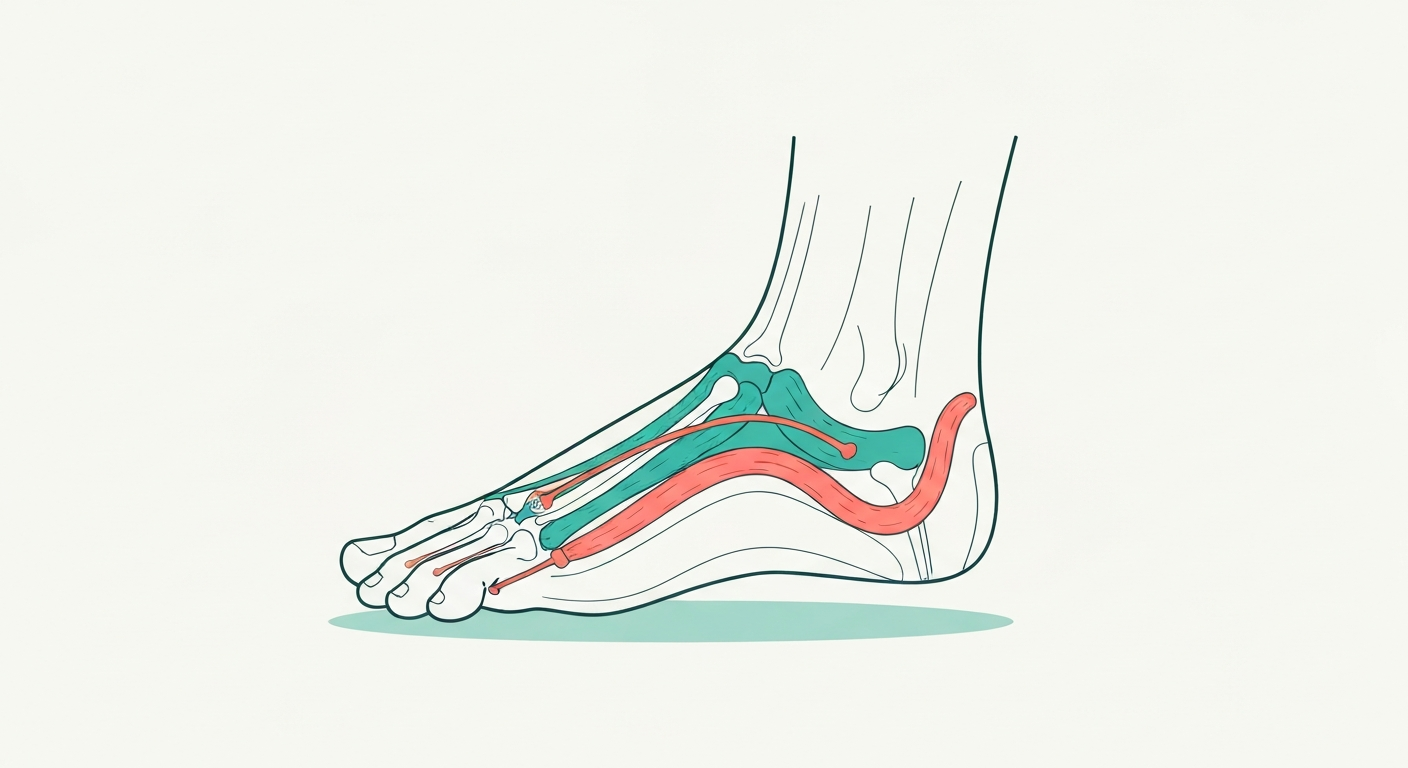
The Role of Inflammation and Pain Receptors
Our bodies have pain receptors that are turned on when inflammation is present. With plantar fasciitis, your plantar fascia has inflammation. This is part of an inflammatory process that occurs as the plantar fascia changes its structure and begins to break down under excess load.
When you stand on this inflamed tissue, it triggers those receptors, which then send a danger message straight to your brain. This is what you experience as sharp heel pain.
Why is Morning Heel Pain the Worst?
One of the hallmark symptoms of plantar fasciitis is severe pain with the first few steps in the morning. Why does this happen?
The inflammation essentially builds up overnight while you are stagnant. When you stop moving and rest or sleep, it gives the fluid and inflammation a chance to pool in the bottom of your foot—gravity naturally dictates that fluid will sit at the lowest point.
Normally, the lymphatic system helps pump this inflammation up and out of your foot, moving it around your body to be cleared. But as you remain stagnant, it builds up. When you take that first step, you are stepping directly onto that highly concentrated area of inflammation, causing that familiar stabbing plantar fascia pain.
"The pain you feel in the morning isn't just stiffness—it's your body reacting to the concentrated inflammation that has pooled in your foot overnight."
The Sensitised Brain-Foot Connection
The other major thing that happens with chronic plantar fasciitis is that your brain becomes what we call "sensitised" to the pain.
What this means is that the nerve pathway I just spoke about—between your foot and your brain—becomes a heavily trafficked highway over time. It starts as a little dirt path, turns into a paved road, and eventually becomes a massive highway. It becomes increasingly sensitive as a means for your body to protect you from hurting yourself further.
As a result, your foot actually becomes more sensitive over time, meaning it takes less pressure or activity to trigger the same amount of pain.
How We Actually Reduce the Pain
Understanding this mechanism gives us the exact blueprint for plantar fasciitis treatment. To reduce the pain, we have to do two things simultaneously:
- Reduce the sensitivity in your foot (calm down that nervous system "highway").
- Clear the inflammation to stop triggering the pain receptors.
This is achieved through specific, targeted techniques in the pain relief stage of recovery (like proper ball rolling, which desensitises the tissue, and movement techniques to pump fluid out). If you commit to these strategies, you can dramatically reduce your plantar fasciitis symptoms and start getting your life back.
Key Takeaways for Your Recovery:
- Morning pain is caused by inflammation pooling overnight at the lowest point (your foot).
- Chronic pain makes your nervous system hypersensitive, meaning your brain overreacts to normal pressure.
- To fix the pain, you must simultaneously desensitise the foot and pump out the built-up inflammation.
Do you need help deciding if we're the right clinic for you?
If you’re not quite ready to book an appointment yet and have some questions you would like answered first, click the link or call our assistant below to complete a form to get the conversation started.